Care & Care Washing
Care instructions: keeping stitching and fabric looking new
Velox Stitched Workshop ·

What to use, what to avoid, and why most interior damage is caused by the wrong cloth rather than by age. A practical routine for stitched covers and trim.
Why the routine matters more than the product
Interior trim rarely fails because of age. It fails because of what is on hands: hand cream, sun cream, oils, hand sanitiser, coffee, and the fine grit that comes off a ring or a key. Those sit in the seam, work between the threads, and abrade the material a little every time the wheel turns. Clean it off regularly and it does no harm. Leave it for a year and the damage is in the fibres rather than on the surface.
The good news is that the correct routine needs one cloth, one bottle and five minutes a month. Everything else is optional.
The weekly and monthly wipe
Use a microfibre cloth, wrung out so it is barely damp. Warm water with a drop of pH-neutral soap is enough. Wipe with the grain of the material rather than in circles, then go over the same area with a clean, dry microfibre to lift the residue instead of leaving it to dry on the surface.
Do this monthly on a steering wheel. Do it weekly if the car is used daily, if the driver uses hand cream, or if the car lives outside. On seats and door cards, monthly is sufficient.
Pay attention to the seams. Dirt collects where thread meets material, and a seam that is wiped but never cleaned is where a cover starts to look tired first. Run the cloth along the stitch line rather than across it.
Product by product
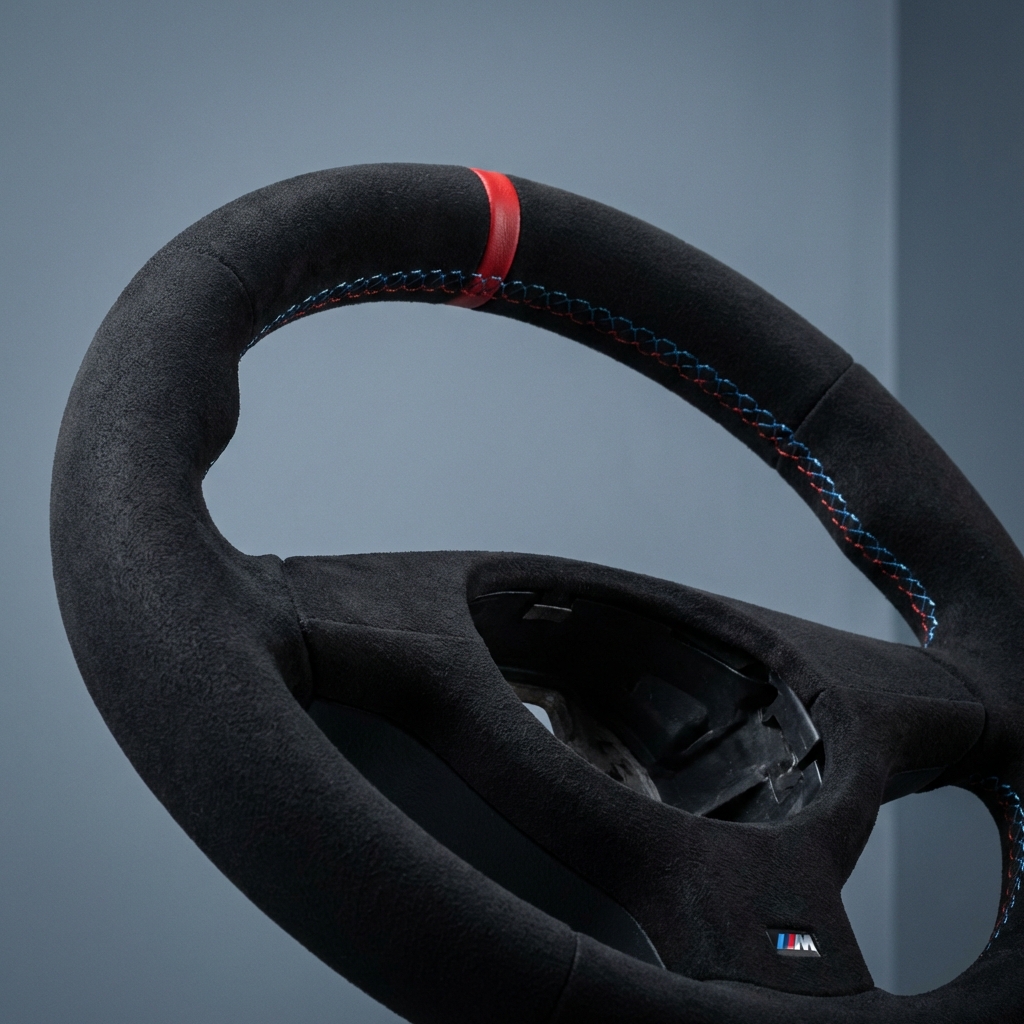
Alcantara and microfibre. This is a pile fabric, so treat it like one. Wipe with a damp cloth, then brush the pile back up with a soft brush once dry. Never scrub: scrubbing crushes the pile and leaves a permanent shiny patch. Avoid anything oil-based, because it mats the fibres. Our Alcantara builds are the ones this matters for most.
Smooth Nappa leather. Softer and more open than coated leather, so it takes on a sheen where hands rest. Wipe with the damp cloth, and use a leather conditioner sparingly, twice a year at most. Too much conditioner on a steering wheel makes it slippery, which is a safety issue before it is an aesthetic one. The Nappa Luxury Series is the finish this applies to.
Perforated leather. The holes are the point and also the problem. Do not soak it, do not spray cleaner directly at it, and do not let liquid pool in the perforations. Apply a small amount to the cloth and work it in gently. If something spills, blot rather than scrub so nothing is pushed through the holes. See the Perforated Sport Wrap and the Audi RS6 (C7) kit.
Carbon grip. The most forgiving of the four. A damp cloth and a dry wipe is the whole routine. Avoid abrasive polish, which takes the matte finish off and leaves shine where there should be none.
What to avoid, without hedging
- Alcohol wipes and hand sanitiser. They strip oils and dye. If sanitiser gets on the rim, wipe it off rather than letting it dry.
- Silicone and dashboard sprays. They attract dust, leave patches on thread, and make a wheel slippery.
- Household multi-surface cleaner. Too alkaline for leather, too harsh for microfibre.
- Stiff brushes and scouring pads. They lift fibre and fray thread. Any brush used on Alcantara should be soft.
- Steam cleaners. Heat and moisture are the two things a stitched cover likes least.
If a product's instructions say to test on an inconspicuous area, do that, and choose an area under the rim rather than the top where hands sit.
Telling the valeter
A surprising amount of damage happens at a hand car wash. The default there is an all-purpose cleaner and a stiff brush, which is the worst possible combination for microfibre and contrast thread. If the car is valeted, say which materials are fitted and ask for a damp cloth only. If that is not something the valeter can accommodate, clean the wheel yourself before it goes in and ask them to leave it.
Sunlight, heat and storage
Ultraviolet light fades thread before it fades material, and the top of the rim takes the most sun through the windscreen. Park facing away from the sun where you can, and use a windscreen shade in summer. That is not fussiness: a red thread that fades unevenly across the top of the wheel is the single most visible sign of a neglected interior.
Heat also matters. A closed car in July reaches temperatures that soften leather and dry microfibre. The shade is cheaper than a replacement.
Abrasion, which no product fixes
Rings, keys in the ignition hand, a lanyard, a wristwatch clasp: those remove material rather than dirty it. If you wear a ring with a setting, expect the left-hand grip area to show wear first, and consider a smooth band. On perforated leather, a ring edge can catch a perforation and tear it; that is a repair, not a clean.
Seat bolsters take the same punishment from jeans rivets and belt buckles. It is normal, it is gradual, and it is worth knowing where it will appear so it does not come as a surprise.
Spills, and the ten-minute rule
Blot, do not rub. Coffee, soft drinks and milk all contain something that will stain if left. Blot with a dry cloth, then wipe with a damp one, then dry. Sugary drinks are the worst on perforated leather because the liquid goes into the holes and the sugar stays.
On Alcantara, blot first and let it dry completely before brushing, or the pile will mat where you pressed.
When to stop cleaning and ask
If thread has frayed, a seam has opened, or a perforation has torn, cleaning will not fix it and further wiping will make it worse. Photograph it and send it to us through the contact page. Most issues are small and repairable, and a stitched cover can usually have a seam re-done rather than being replaced.
For what each material is like before you buy, the materials guide covers behaviour in heat and light. For fitted care on a specific build, ask us and we will answer for that material rather than in general.
None of this is complicated, and none of it costs anything: a microfibre cloth, mild soap, and the habit of not using whatever is nearest.
Frequently asked
+Can I use household wipes on a leather or Alcantara cover?
No. Most household wipes contain alcohol or solvent, which strips oils from leather and flattens the pile on microfibre. A damp microfibre cloth with a little mild soap is the safer routine.
+How often should it be cleaned?
A quick wipe monthly, and a proper clean every few months, sooner if the car is used daily or the driver uses hand cream. Waiting until the rim looks dirty means soil has already worked into the seam.
+Does silicone dressing protect the stitching?
No. Silicone sits on the surface, attracts dust and leaves patches that are difficult to remove from thread. It is one of the few products we would actively ask you not to use.
Related reading
Fitment · 7 November 2026
Popular requests, and how to brief a custom design properly
The briefs that go smoothly have the same six facts in them. Here is what to send, what we will ask next, and the mistakes that turn a simple build into a fortnight of emails.
Read the guide →
Gifting · 6 November 2026
Gifts for the car enthusiast who owns everything
When the toolbox is full and the garage is finished, the useful gifts are consumables, samples, and time in a workshop. What we actually offer, with real prices and lead times.
Read the guide →Styling Guides · 2 November 2026
How to choose a stitch colour that works with your interior
Contrast stitching is a commitment, not a detail. A practical method for choosing a thread colour that lifts the cabin without fighting the car it is going in.
Read the guide →