Styling Guides
Stitched versus printed: what lasts longer on a car interior
Velox Stitched Workshop ·
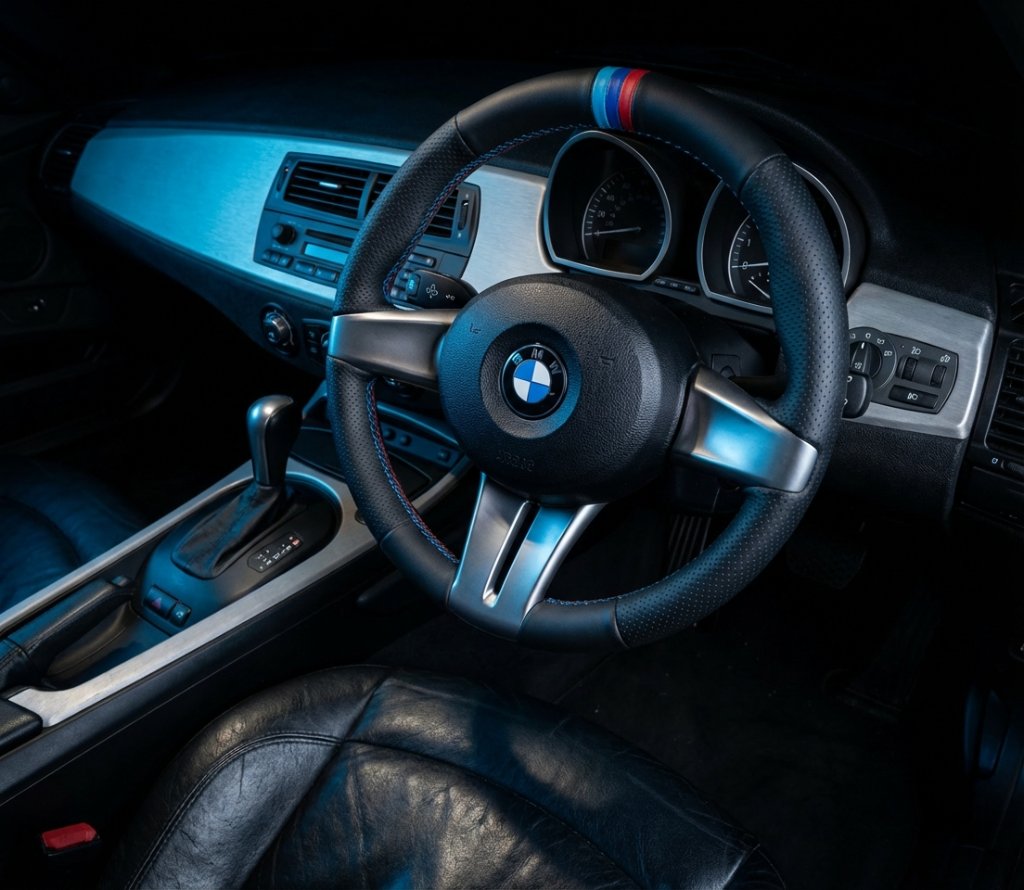
Printing lays an image on a surface. Stitching joins two panels with thread. On the parts of a car you touch every day, that difference decides what survives.
Two different ways of putting a finish on a surface
The words get used as if they were competing styles. They are not styles, they are constructions, and the construction decides everything that happens afterwards.
Printing applies an image or a colour to a substrate: a film, a coated fabric, a vinyl, sometimes leather. The pattern lives in a layer on top. It can reproduce almost anything, it is quick, and it is cheap at low volume because the expensive part is the artwork, not the material.
Stitching joins two pieces of material with thread through punched holes. The pattern is not an image at all: it is the geometry of the panels and the line the thread takes across them. A diamond pattern is not printed diamonds, it is panels arranged so the seams form diamonds, and the thread is what you see.
What happens where your hands sit
A steering wheel is the most touched object in a car. Palms rest on it, rings turn against it, hand cream and sun cream sit on it, and it lives directly behind a windscreen in full sun. Whatever finish is there meets all of that.
On a printed finish, the print layer is the part in contact. It wears where hands sit first, which is usually the ten and two positions and the top of the rim, and the pattern thins or shines before the substrate gives up. That is not a manufacturing fault, it is what a surface layer does when it is rubbed for three years.
On a stitched cover, the contact points are thread and material. Both are abrasion-resistant in a way that an image is not, and when they do wear they wear honestly: thread can fray, material can take a sheen, but nothing lifts off because there was never a film to lift.
This is why our covers are hand-stitched in material rather than printed: it is the construction that suits the wear, not a preference for the look.
Fading is the second difference
Sunlight is unkind to pigment. A printed pattern that depends on saturated colour has a lot of pigment on its surface, and ultraviolet light attacks it. Red is the classic casualty: it shifts before anything else does, which is why so many older red interiors read as orange or pink.
A stitched build spreads the visual load. The colour you see is thread and dyed material, both of which fade more slowly and more evenly, and the pattern itself survives fading because it is structural. A diamond still reads as a diamond when the thread has lost a little depth. A printed diamond reads as a smudge.
Repairability, which nobody thinks about at purchase
A seam is a component. If a thread breaks, or a single panel is damaged by a ring or a dropped tool, that seam can be unpicked and that panel replaced. The cover keeps working. This is unglamorous and it is the single most practical argument for stitching.
A printed surface has no equivalent. Once the print is scuffed through, the pattern is gone in that spot, and no local repair restores it convincingly. The usual answer is to replace the whole piece, which is wasteful for one worn thumb patch.
The same logic applies to the rest of the interior: a stitched door card or seat insert can have one panel corrected. A printed one generally cannot.
Feel, which is subjective but not irrelevant
Thread under the fingers is a texture. It is part of why a factory performance interior uses contrast stitching at all: it is a way of signalling that something was made rather than moulded. Alcantara with a visible seam feels different from a smooth printed surface, and no amount of good artwork reproduces that.
This cuts both ways. Some buyers want a completely smooth rim, and a printed or moulded finish gives them that. If smoothness is the priority, our materials guide explains which of our finishes sit flattest, and the Nappa Luxury Series is the softest option we make. Stitching is still part of it, because that is how it stays on.
Where printing genuinely makes sense
We are not going to pretend printed trim has no place. It is the right answer when the pattern is photographic, when the volume is a single cheap piece, when the surface is out of reach of hands (a boot floor, a display plaque), or when a novelty look matters more than longevity.
It is the wrong answer for the parts of a car a driver touches every day: the wheel rim, a seat bolster, a door pull, a handbrake gaiter, a gear knob. Those are exactly where a surface layer fails first.
How to judge a finish you are looking at
Three questions separate the constructions quickly. Is there a visible thread, and does it pass through the material rather than sit on it? Can you see the edge of a film where the pattern stops? And if you scratch it with a fingernail in an inconspicuous place, does the colour stay?
If a listing describes a pattern as printed onto leather, believe it, and price the replacement into what you are buying.
What we make, plainly
Every cover in our catalogue is a cover: cut from material, perforated where specified, and stitched by hand. We do not print patterns onto leather and call it stitched. The six kits we hold built, including the Perforated Sport Wrap and the Mercedes-AMG C63 (W204) cover, are all stitched builds with real thread in the seams.
If you want to compare materials before choosing, the free swatch pack posts to UK addresses, and the gift guide lists what each of those kits costs. If your car is not in the catalogue, start with the compatibility guide or ask through the quote form.
Frequently asked
+Does printed trim crack?
Printed finishes sit on the surface of the substrate, so the print layer is what meets hands, keys and sunlight. Over time that layer can wear thin, shine up or lift, and once it has lifted it cannot really be put back. Stitching puts the wear on thread and material rather than on an image.
+Can a stitched cover be repaired?
A seam can be unpicked and re-stitched, and a damaged panel can be replaced without discarding the entire cover. That is a practical advantage of thread over print: the join is a component, not a finish.
+Do you publish durability test results?
No, and we would be sceptical of anyone who does without describing the test. Wear happens in the real world: hand cream, sun through a windscreen, rings, a hot car in July. We describe how each finish behaves in the workshop and on customer cars rather than quoting invented laboratory numbers.
Related reading

Styling Guides · 2 November 2026
How to choose a stitch colour that works with your interior
Contrast stitching is a commitment, not a detail. A practical method for choosing a thread colour that lifts the cabin without fighting the car it is going in.
Read the guide →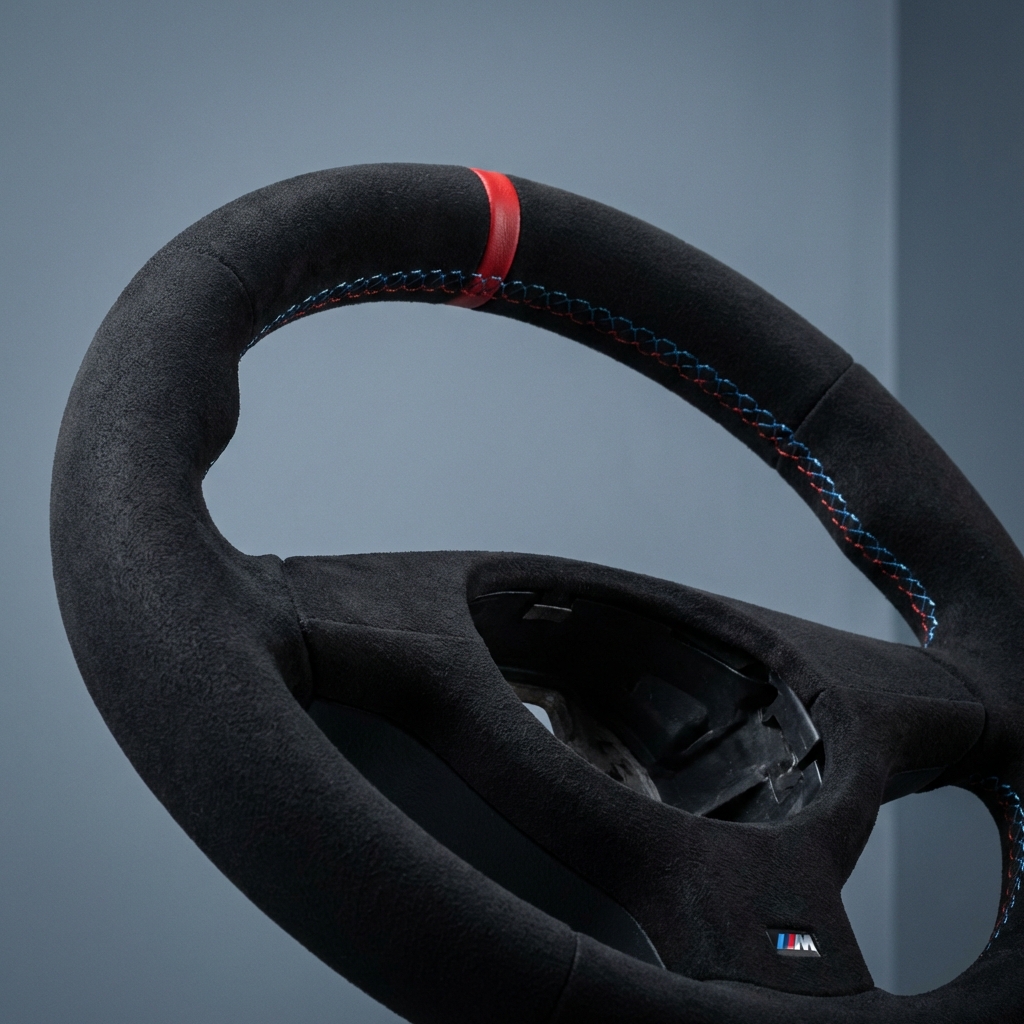
Fitment · 7 November 2026
Popular requests, and how to brief a custom design properly
The briefs that go smoothly have the same six facts in them. Here is what to send, what we will ask next, and the mistakes that turn a simple build into a fortnight of emails.
Read the guide →Gifting · 6 November 2026
Gifts for the car enthusiast who owns everything
When the toolbox is full and the garage is finished, the useful gifts are consumables, samples, and time in a workshop. What we actually offer, with real prices and lead times.
Read the guide →